
There are two types of dialysis hemodialysis and peritoneal dialysis that both perform normal kidney functions filtering waste and excess fluid from the blood. The patient performs manual exchanges which take around 20-30 minutes to complete and are usually done 3-5 times per day.
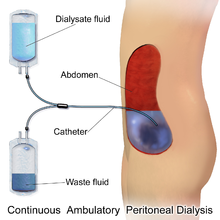
Peritoneal Dialysis Wikipedia

Kidney Dialysis Haemodialysis Peritoneal Dialysis Periotonitis
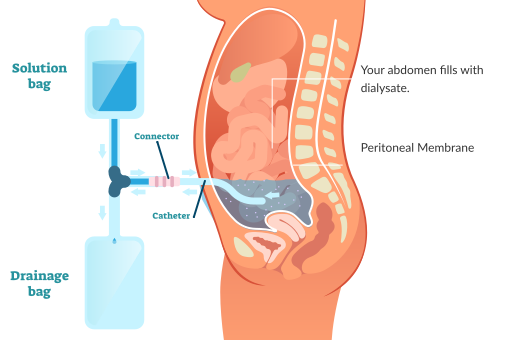
What Is Peritoneal Dialysis The National Kidney Foundation Nkf Singapore
Continuous Ambulatory Peritoneal Dialysis CAPD Automated Peritoneal Dialysis APD The basic treatment is the same for each.
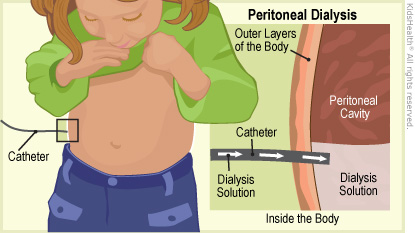
Capd kidney dialysis. Dialysis is most often required due to kidney failure. Peritoneal dialysis This membrane is a fine layer of tissue that lines your peritoneal abdominal cavity covering. Continuous ambulatory peritoneal dialysis CAPD Continuous cycling peritoneal dialysis CCPD Continuous ambulatory peritoneal dialysis CAPD You fill your abdomen with dialysate let it remain there for a prescribed dwell time then drain the fluid.
A few weeks before you start peritoneal dialysis a surgeon places a soft tube called a catheter in your belly. During these exchanges youll insert a special peritoneal catheter which will transfer dialysis fluid in and out of your peritoneal cavity cleaning our blood. Peritoneal dialysis PD is a treatment for kidney failure that uses blood vessels in the lining of your abdomenthe peritoneumto naturally filter waste from your blood.
Continuous ambulatory peritoneal dialysis CAPDAn exchange takes about 30 to 40 minutes and most people need to do four exchanges per day. There are two forms of dialysis haemodialysis and peritoneal dialysis. You attach a bag filled with dialysate fluid to the APD machine before you go to bed.
Peritoneal dialysis is further broken down into two main types continuous ambulatory peritoneal dialysis CAPD and automated peritoneal dialysis APD. Dialysis is one of the options for managing kidney failure. There is no cure for CKD but you can take steps to preserve function for as long as possible.
Peritonitis is a common and serious complication of peritoneal dialysis PD. Peritoneal dialysis is a treatment for kidney failure that uses the lining of your abdomen or belly to filter your blood inside your body. CAPD takes about 2030 minutes to drain the fluid in and out and needs to be done four times a day.
Continuous Ambulatory Peritoneal Dialysis CAPD. Gravity moves the fluid through the catheter and into and out of your abdomen. Continuous ambulatory peritoneal dialysis CAPD and automated peritoneal dialysis APD.
Youll likely do four to six exchanges each day. Your doctor can help you decide which type fits your lifestyle. Continuous ambulatory peritoneal dialysis CAPD.
The dialysate is left in the abdomen for up to 8 hours and then replaced with a. After a CAPD exchange is started most people read watch TV or use their computer for 20-25 minutes during drain and fill. Dialysis filters out toxins wastes and extra fluid.
As you sleep the machine automatically performs a number of fluid exchanges. Continuous ambulatory peritoneal dialysis CAPD. In CAPD your abdomen is filled and drained multiple times each day.
This type uses a disposable double bag system. Late-stage kidney disease requires dialysis or a. More and more people are choosing home dialysis which can offer greater flexibility and better outcomes.
CAPD Continuous Ambulatory Peritoneal Dialysis CAPD is a manual therapy that involves connecting your catheter to a set of bags to empty your abdomen and then refill it with fresh solution. However the number of treatments and the way the treatments are done make each method different. Automated peritoneal dialysis which uses a machine called a cycler to do three to.
Dialysis is a treatment for individuals whose kidneys are failing. Continuous ambulatory peritoneal dialysis CAPD requires no machinery and the patient or a caregiver can do it. Chronic kidney disease CKD means your kidney function slowly gets worse with time.
Health care providers call this lining the peritoneum. When you have kidney failure your body cannot get rid of extra water and waste products. It is used to remove excess fluid correct electrolyte problems and remove toxins in those with kidney failure.
In moderate chronic kidney disease CKD increases in the fractional. Peritoneal dialysis is further broken down into two main types. The best dialysis option for you is the one that best fits your lifestyle and health needs.
Dialysis artificially removes waste from your blood. High blood pressure and diabetes are two common causes of CKD. 803 - Calculating Payment for Intermittent Peritoneal Dialysis IPD for Method I Claims Submitted to the AB MAC A 8031 - IPD at Home for Method I Claims Submitted to the AB MAC A 804 - Calculating Payment for Continuous Ambulatory Peritoneal Dialysis CAPD and Continuous Cycling Peritoneal Dialysis CCPD Under the.
Dialysis empowers you to live a full active life with kidney failure. Peritoneal dialysis has better outcomes than hemodialysis during the first couple of years. Continuous Ambulatory Peritoneal Dialysis CAPD CAPD often referred to as day bags is a method that usually involves doing four exchanges each day each lasting 30 minutes.
This can be done either by hand four times a day via a process called CAPD continuous ambulatory peritoneal dialysis or by machine overnight and known as APD automated peritoneal dialysis. You sleep with solution in your belly at night. Youll do your exchanges by hand.
Kidney failure can sometimes happen over a short period days or weeks this is called acute kidney failure as the result of a serious illness or accident. The kidney has a vital role in magnesium homeostasis and although the renal handling of magnesium is highly adaptable this ability deteriorates when renal function declines significantly. There are 2 types of kidney dialysis.
Automated peritoneal dialysis APD is similar to CAPD except a machine is used to control the exchange of fluid while you sleep. The choice of dialysis method depends of factors such as your. You do this yourself usually four or five times a day at home andor at work.
More commonly kidney failure is the result of chronic kidney disease where kidney. Continuous Ambulatory Peritoneal Dialysis CAPD is the only type of peritoneal dialysis that is done without machines. Peritoneal dialysis PD is a type of dialysis which uses the peritoneum in a persons abdomen as the membrane through which fluid and dissolved substances are exchanged with the blood.
Typically people do four exchanges per day at regularly spaced intervals eg early morning lunchtime late afternoon bedtime. CAPD is continuous machine-free and done while you go about your normal activities such as work or school. Hemodialysis and peritoneal dialysis.
During PD a cleansing solution called dialysate is sent through a PD catheter to your peritoneal abdominal cavity where it absorbs waste and toxins from blood vessels in the peritoneum and is then drained back out. PD-associated peritonitis is the direct or major contributing cause of death in 15 of patients on PD 12Moreover a single episode of severe peritonitis or multiple peritonitis episodes frequently leads to diminished peritoneal ultrafiltration capacity and is the most common cause of conversion to. This method doesnt require.
Dialysis is the removal of the water and waste products. You put a bag of dialysate about two quarts into your peritoneal cavity through the catheter.
The Kidney Urology Foundation Of America

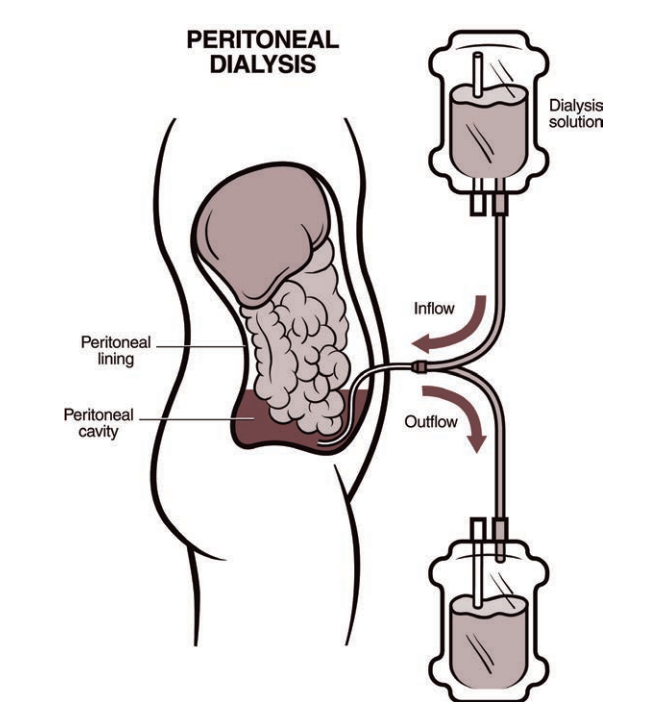
What Is Peritoneal Dialysis National Kidney Foundation

Utility Of Peritoneal Scintigraphy In Peritoneal Dialysis Patients One Center Experience American Society Of Nephrology
What Is A Peritoneal Dialysis Machine Fresenius Kidney Care


Future Of Icodextrin As An Osmotic Agent In Peritoneal Dialysis Kidney International
Peritoneal Dialysis For Teens Cook Children S

Dialysis Overview Procedure Types Of Dialysis Medicines Complications And More Singapore General Hospital
Types Of Peritoneal Dialysis Fresenius Kidney Care


