
Again one could use Figure IVA to have students predict the boiling point for HF rather than just showing the boiling point as provided in Figure IV. Dipole-dipole interactions fall off with 1r 3.

Hydrogen Bonding Dipole Dipole Ion Dipole Forces Strong Intermolecular Forces Video Lesson Transcript Study Com

Hydrogen Bonding Dipole Dipole Ion Dipole Forces Strong Intermolecular Forces Video Lesson Transcript Study Com
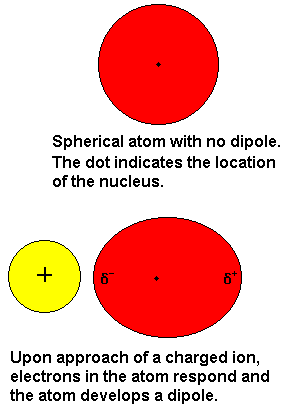
Induced Dipole Forces
Those atoms that are more electronegative pull the bonded electrons closer to themselves.
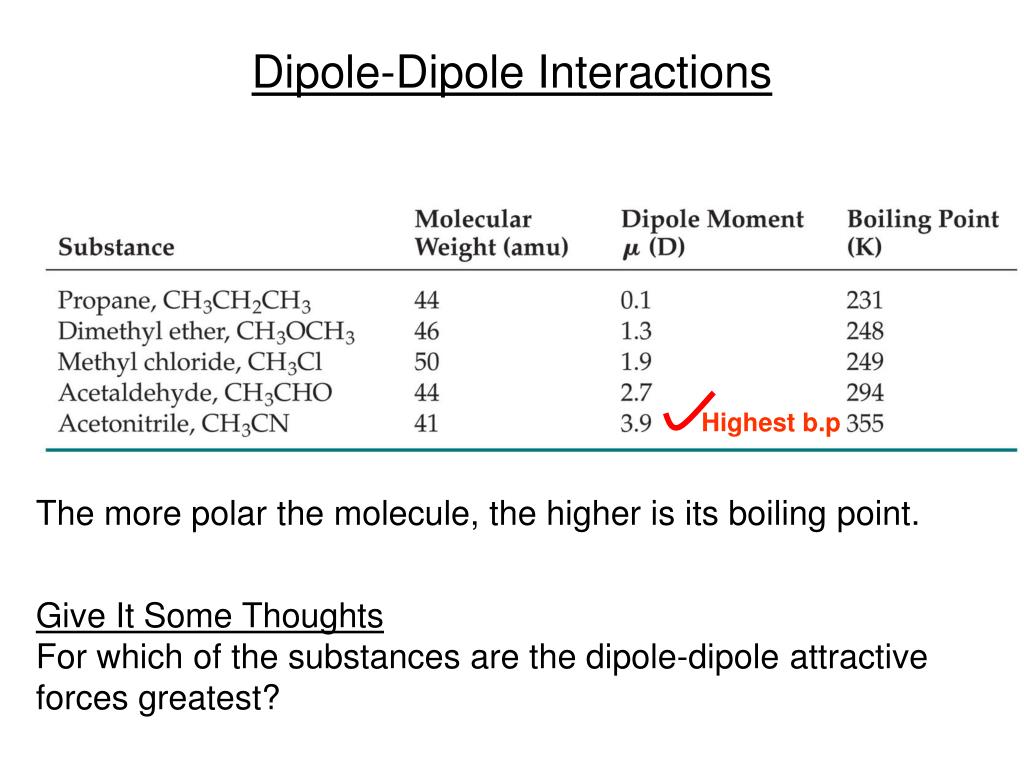
Dipole dipole forces. A dipole is a molecule that has both positive and negative regions. However it also has some features of covalent bonding. Dipole-Dipole Forces and Their Effects Predict which will have the higher boiling point.
Polar molecules can also induce dipoles in nonpolar molecules resulting in dipoleinduced dipole forces. An example in organic chemistry of the role of geometry in determining dipole moment is the cis and trans isomers of 12-dichloroetheneIn the cis isomer the two polar CCl bonds are on the same side of the CC double bond and the molecular dipole moment is 190 D. Therefore in liquid acetone for example favorable dipole-dipole interactions outweigh unfavorable dipole-dipole interactions.
Dipoledipole forces occur between molecules with permanent dipoles ie polar molecules. Because CO is a polar molecule it experiences dipole-dipole attractions. Ion-Dipole Dipole-Dipole Dispersion Forces hMgSO 4 s Ion-Ion Ion-Dipole Dipole-Dipole Dispersion Forces iHeptane C 7 H 16 l Ion-Ion Ion-Dipole Dipole-Dipole Dispersion Forces Which of the following has the highest boiling point.
The order of strength of these intermolecular forces is given below. All these bonds occur due to electric charges resulting from the arrangement of electrons and nuclei in the molecules. Definition of a Dipole.
Although we talk as though electrons distribute their time evenly among all atoms in a molecule some. Dipole-dipole - Interaction of polar molecules with other polar molecules examples. By considering real induced electric dipole moments we find the quantum phase transitions for 2- and 3-level atomic systems interacting with 1- and 2- modes of the electromagnetic field respectively.
Dipole-Dipole forces exist between the positive end of one polar molecule and the negative end of another polar molecule. These are called hydrogen bonds and are stronger than conventional dipole-dipole forces. Molecular dipoles occur due to the unequal sharing of electrons between atoms in a molecule.
A H2S b CH3CH3 c CH3OH d Ar 3. Some common types of intermolecular forces are London dispersion dipole-dipole Hydrogen bonding and ion-ion force. Among the three types hydrogen bonds are the strongest form of intermolecular bonds.
Dispersion forces are also considered a type of van der Waals force and are the weakest of all intermolecular forces. There are three types of intermolecular forces known as dipole-dipole forces London dispersion forces and hydrogen bonding forces. They are often called London forces after Fritz London 1900-1954 who first proposed their existence in 1930.
It has to do with how strongly the molecules interact with each other through intermolecular forces. If you are also interested in hydrogen bonding there is a link at the bottom of the page. Intermolecular Forces Complications Any molecules that experience one type of attraction also experience all the weaker types of attractions HCl molecules experience.
The attractive intermolecular forces between particles that tend to draw the particles together. In the trans isomer the dipole moment is zero because the two CCl bonds are on opposite sides of the CC and cancel and the. Dipole-induced dipole - a polar molecule interacting with a nonpolar one.
Why do different liquids boil at different temperatures. Identify the intermolecular forces in each of the following substances. A Hydrogen bond is a dipole-dipole interaction.
The hydrogen bond is often described as a strong electrostatic dipoledipole interaction. Write the following in the increasing order of boiling points. Dipole-dipole forces Hydrogen bonding Ion-ion forces.
Dipole dipole forces occur between polar molecules and are due to permanent dipoles in the molecule. It is directional stronger than a van. A HCl b CH3CH3 c CH3NH2 d Kr 2.
The kinetic energies of the particles atoms molecules or ions that make up a substance. The especially strong intermolecular forces in ethanol are a result of a special class of dipole-dipole forces called hydrogen bonds. Londons dispersion force dipole-dipole H-bonding Ion-ion.
N 2 or CO. 2 carbon monoxide CO London dispersion forces 3 silicon tetrafluoride SiF 4 London dispersion forces 4 nitrogen tribromide NBr 3 dipole-dipole forces 5 water H 2 O hydrogen bonding 6 acetone CH 2 O dipole-dipole forces 7 methane CH 4 London dispersion forces 8 benzene C 6 H 6 London dispersion forces. A hydrogen bond is an extreme form of dipole-dipole bonding referring to the attraction between a hydrogen atom that is bonded to an element with high electronegativity usually nitrogen oxygen or fluorine.
Caffeine molecules have bond dipoles that measure the polarity of a chemical bond within a molecule. This page explains the origin of the two weaker forms of intermolecular attractions - van der Waals dispersion forces and dipole-dipole attractions. A hydrogen bond is the attraction between a hydrogen bonded to a highly electronegative atom and a lone electron pair on a fluorine.
In liquids the orientations of molecular dipoles change rapidly as molecules tumble about. Hydrogen bonding which is the strongest form of dipole-dipole interactions and. Solution CO and N 2 are both diatomic molecules with masses of about 28 amu so they experience similar London dispersion forces.
They occur whenever there is a separation of positive and negative charges. For molecules of similar size and mass the strength of these forces increases with increasing polarity. This is used to determine the quantum phase diagram associated to the ground state of the system and quantify the effect of the dipole-dipole Hamiltonian interaction.
Acetone in acetone triethyl amine in acetone Hydrogen bonding - special case of dipole-dipole when there is a H bonded to a N O or F. A dipole-dipole interaction is an attraction or repulsion between polar molecules. The positive region of one molecule is attracted to the negative region of another and repulsed by the positive region of another molecule.
Two factors determine whether a substance is a solid a liquid or a gas. These forces are responsible for the liquids solids and solutions state of any compound. However dipole moments tend to orient favorably.
Intermolecular attractions are attractions between one. Kinetic energy tends to keep the particles moving apart. A hydrogen bond is the attraction between a lone pair of electrons on the oxygen atom of one molecule and the electron-deficient hydrogen atom of a nearby molecule.
Dipole-dipole forces are similar in nature but much weaker than ionic bonds. This term is misleading since it does not describe an actual bond. Water acetic acid acetone in water.
The buildup of electron density around an atom or discreet region of a molecule can result in a molecular dipole in which one side of the molecule possesses a partially negative. Between CO2 and SO2 only _____ will have dipole-dipole interaction because _____. Polar covalent bonds behave as if the bonded atoms have localized fractional charges that are equal but opposite ie the two bonded atoms generate a dipoleIf the structure of a molecule is such that the individual bond dipoles do not cancel one another then the molecule has a net dipole moment.
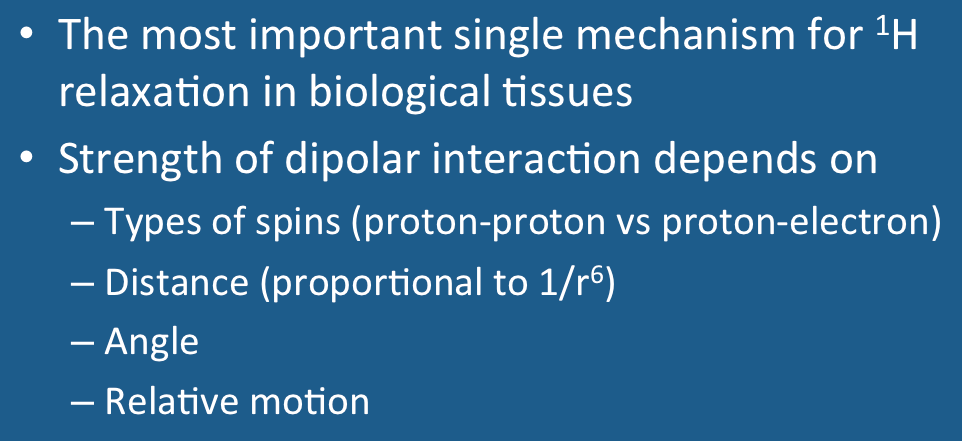
Dipole Dipole Interaction Questions And Answers In Mri
5 4 Dipole Dipole Forces And Hydrogen Bonding Lessons Blendspace


Intermolecular Forces Emedicalprep

Intermolecular Forces Boundless Chemistry
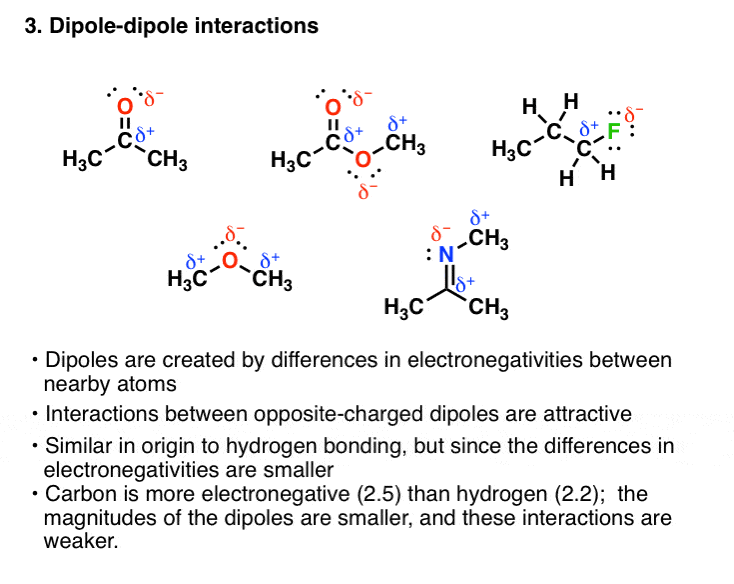
The Four Intermolecular Forces And How They Affect Boiling Points

Intermolecular Forces Emedicalprep

Dipole Dipole Forces Video Khan Academy
Ppt Dipole Dipole Interactions Powerpoint Presentation Free Download Id 3374352


